For clinical trials, AI needs a quality copilot

Surface issues in protocols, validate created content, and handle amendments with ease

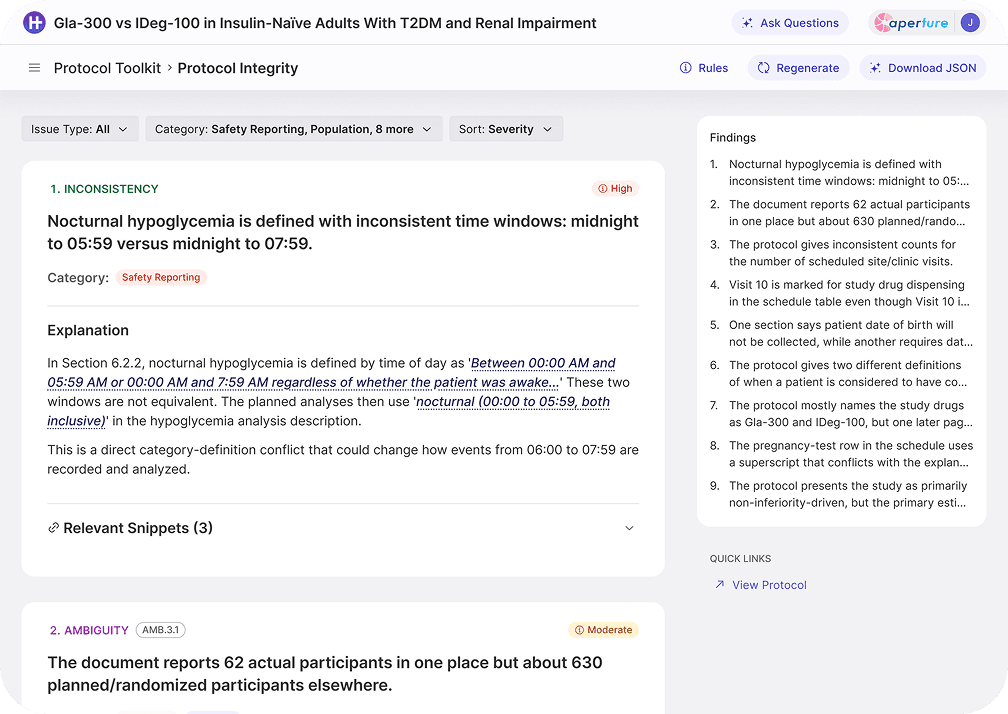
Validate Source
Consistency verification across clinical trial documents, starting with the protocol.
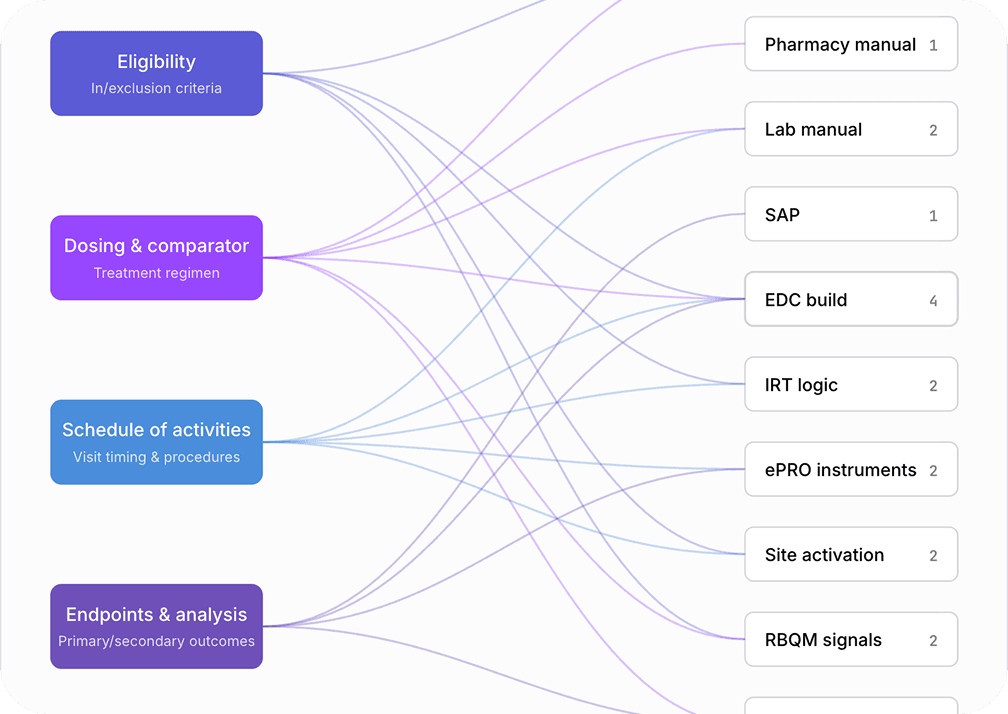
Create Content
Generate study documents from the protocol, trace back to source.
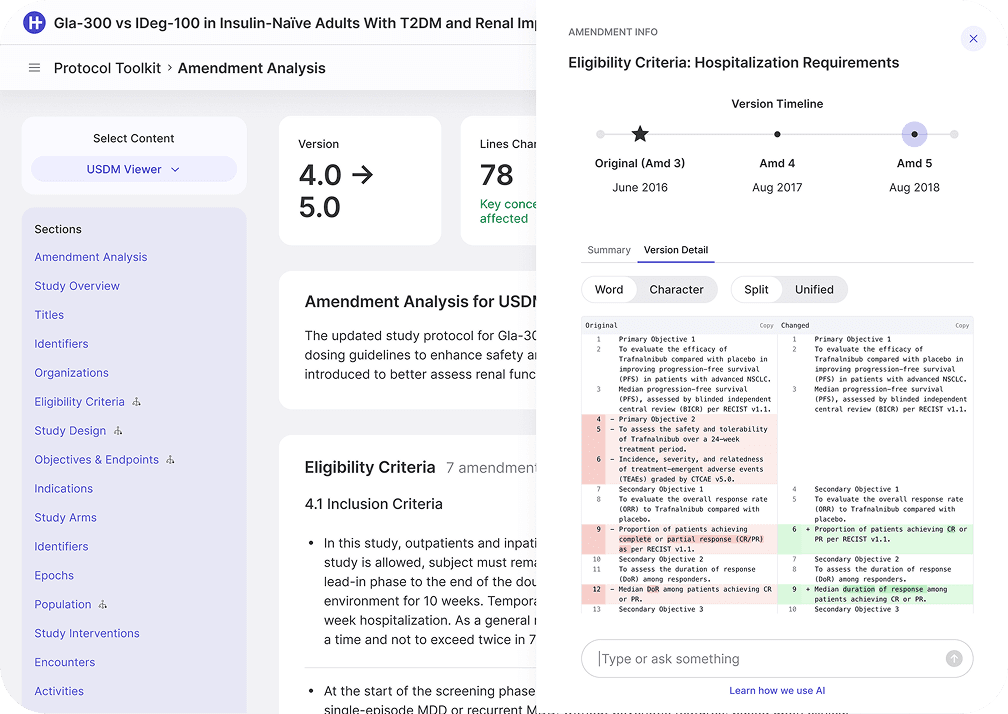
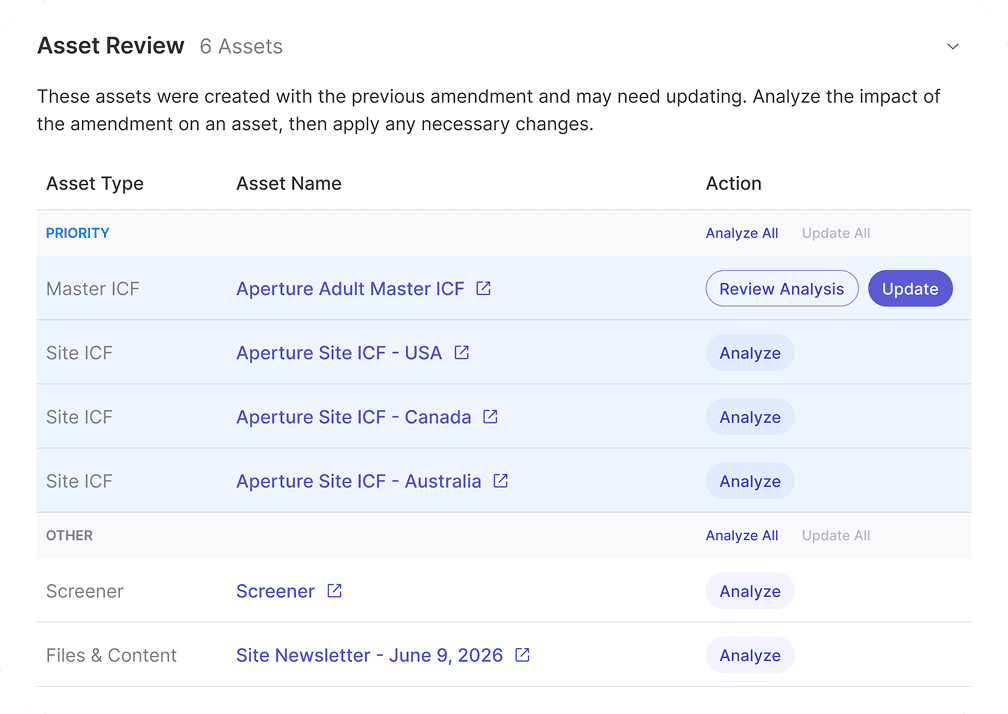
Handle Amendments
Analyze amendment changes, apply changes to created documents and validate output.
HumanTrue Quality Loop


We've studied thousands of real-world protocols

Using our AI pipeline, we've analyzed thousands of clinical trial protocols. We've found inconsistent language, ambiguities, and knowledge gaps all of which compromise the ability to run a trial.

Unlike other approaches that treat the protocol as a simple input-output problem, we believe the complexity and stakes of clinical trials demand a quality copilot that can help human teams understand and improve their protocols.

INCONSISTENCY
Oncology

Two starting doses, one drug

The safety run-in section lists two different starting doses (24 mg and 80 mg) for the same drug combination.

Impact

A dose discrepancy directly affects participant safety and could result in dosing errors flagged as serious protocol deviations. Matters most to the medical monitor, pharmacist, and investigators.

24 mg starting dose
80 mg starting dose
AMBIGUITY
Oncology

Disease progression — which kind?

The synopsis uses "disease progression" as a treatment-stopping trigger, but that term can mean any radiographic progression or only iRECIST-confirmed progression.

Impact

The wrong interpretation could stop treatment prematurely on a pseudo-progression, denying potentially effective therapy to a patient. Matters most to investigators and the medical monitor.

"disease progression"
radiographic? iRECIST?
INCONSISTENCY
Oncology

How many patients, exactly?

The synopsis says 15–24 patients will be enrolled in Phase 1b, but the sample size section says 32.

Impact

Sample size drives budget, drug supply, site activation, and the statistical validity of the analysis. Matters most to the sponsor, statistician, and operations team.

15–24 patients (synopsis)
32 patients (sample size)
INCONSISTENCY
Oncology

Imaging cadence collision

The synopsis says imaging is every 2 months, but the efficacy section says every 6 weeks.

Impact

Different scan intervals across sites would introduce noise into the primary efficacy endpoint and complicate central read scheduling. Matters most to site coordinators and the imaging core lab.

Every 2 months (synopsis)
Every 6 weeks (efficacy)
INCONSISTENCY
Oncology

The wrong cross-reference

The Japan-specific section cites Section 8.7 for genetic research, but Section 8.7 covers biomarkers.

Impact

A misdirected reference can delay regulatory review or result in genetic samples being handled under the wrong consent and procedures. Matters most to Japanese-region regulators and site staff.

Section 8.7 (cited)
Biomarkers (actual)
INCONSISTENCY
Oncology

17 cycles or 18?

The synopsis sets the duration of approximately 2 years to be 17 cycles, but the treatment-duration section sets it at 18.

Impact

An extra cycle affects exposure, safety follow-up duration, and per-patient drug demand across all sites. Matters most to investigators and drug supply.

17 cycles (synopsis)
18 cycles (treatment)
INCONSISTENCY
Rheumatology

Named 50%, timed at 30%

The endpoint is labeled "time to first 50% pain reduction," but timing starts at the earlier 30% reduction date.

Impact

The recorded event time will systematically precede the milestone the endpoint name promises, biasing the survival analysis and potentially invalidating the primary efficacy result. Matters most to the trial statistician and regulators.

Endpoint: "50% pain reduction"
Timing starts at 30%
AMBIGUITY
Oncology

Contraception duration mismatch

The protocol enrollment criteria and amendment log list different contraception durations.

Impact

Conflicting guidance could lead to inadequate pregnancy prevention or informed-consent findings and potential unnecessary screen failures. Matters most to investigators, recruiters, and site coordinators.

Enrollment criteria
Amendment log